Background
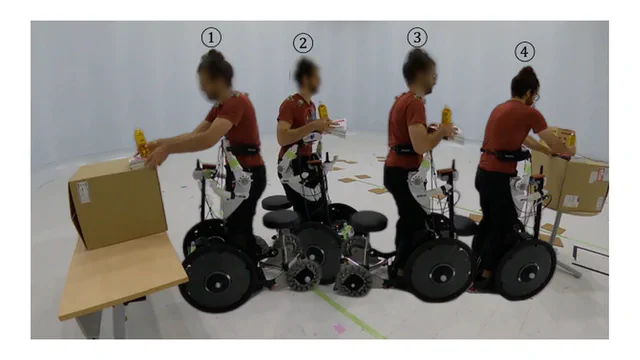
People with lower-limb paralysis who use a wheelchair spend the day seated, below the eye level of the people around them. Qolo combines a powered wheelchair base with a passive exoskeleton, so the user can stand up, sit down and drive while standing.
Aims
Let people with lower-limb paralysis move and interact at eye level in daily life, work and leisure, with a compact device.
Methods
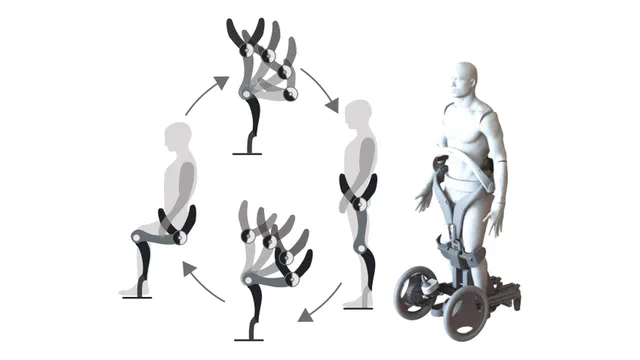
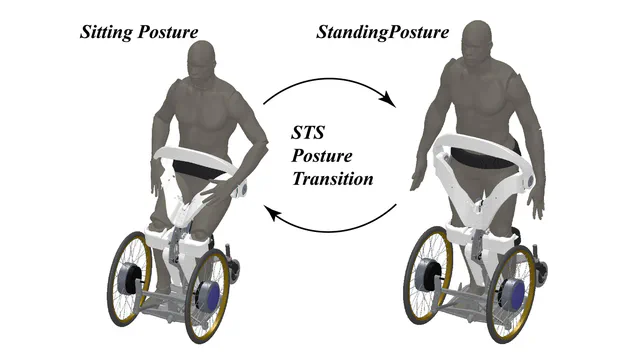
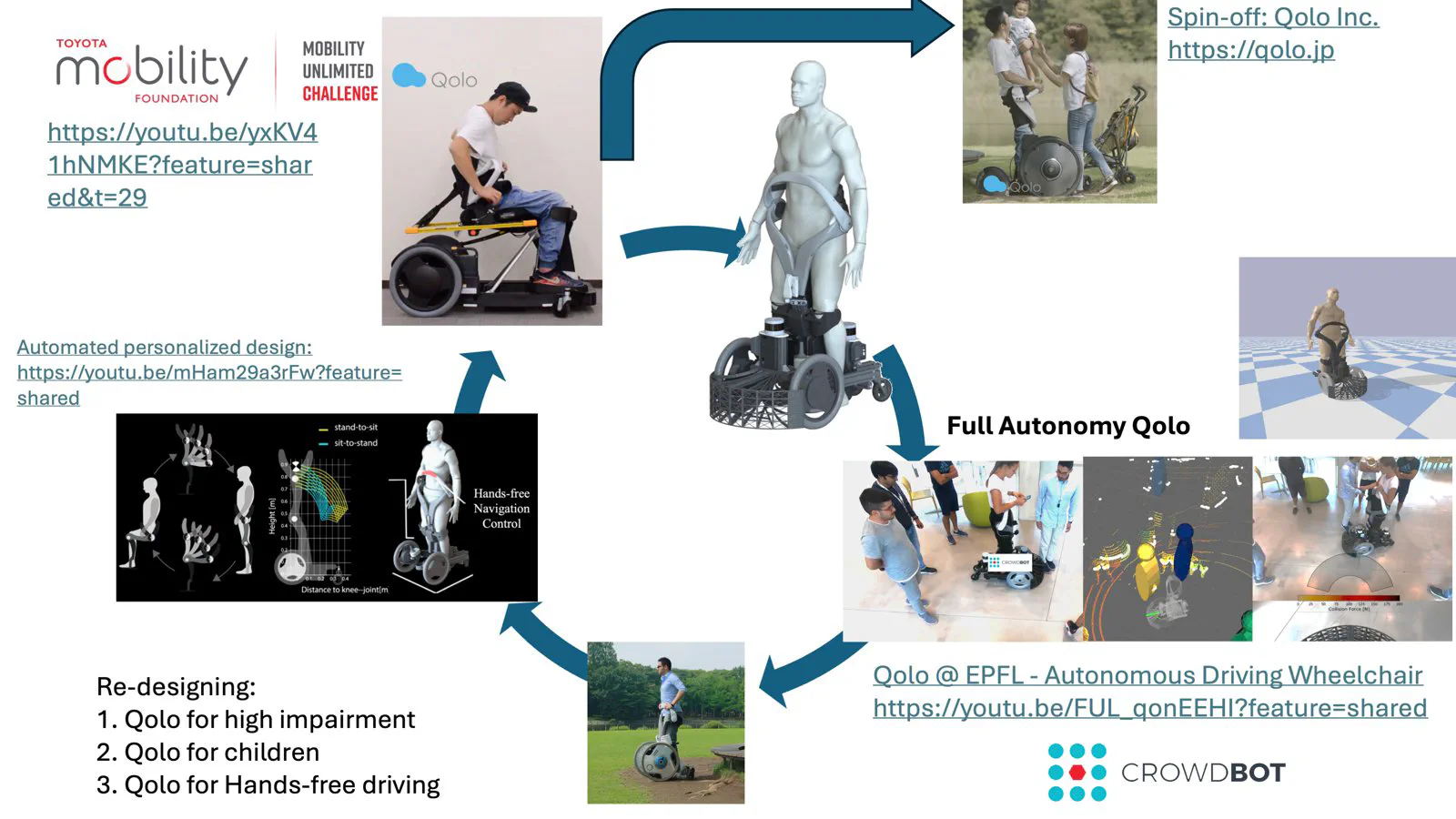
A passive mechanism synchronizes the motion of the trunk and knees, so the user’s residual upper-body motion drives the sit-to-stand and stand-to-sit transitions without motors. An impedance model of the user defines the interaction with the exoskeleton. The user steers by leaning the upper body toward the target direction, with no hands or worn controller. We evaluated the transitions and the energy transfer with users with spinal cord injury, and the device was transferred to the spin-off Qolo Inc.